
Iran’s warning that there is “no safe place” for U.S. troops is less a literal diagnosis of American vulnerability than a deliberate instrument of deterrence, rooted in real regional strike capabilities but stretched rhetorically to maximize psychological pressure.
Key Points
- Iranian armed forces spokesman Abolfazl Shekarchi has repeatedly declared that U.S. troops, equipment, and officials can be hit “anywhere,” including hotels, parks, and tourist sites.
- Those threats sit atop a proven record of Iranian and proxy attacks on U.S. bases and soft facilities in the Middle East, giving the rhetoric non-trivial credibility.
- U.S. military posture, strike responses, and force-protection measures show Washington does not accept the “no safe place” claim as operationally absolute, and is actively contesting Iranian reach.
- The real story is a contest of wills and narratives: Iran uses maximalist warnings to raise the perceived costs of a U.S. presence, while the United States works to contain the threat, reassure allies, and keep deterrence stable.
How Iran’s “No Safe Place” Threat Has Been Framed
Brigadier General Abolfazl Shekarchi, the senior spokesman for Iran’s armed forces, has become the focal voice for Tehran’s claim that U.S. and Israeli personnel have lost sanctuary in the region and beyond. In multiple interviews and state-linked reports, he has asserted that in any conflict American soldiers and their equipment “will be destroyed,” and that U.S. resources and interests in West Asia are within Iran’s firing range. These statements are not casual; they are delivered through state media and amplified by regional outlets, signaling an official deterrent posture rather than a fringe view.
Shekarchi’s rhetoric goes beyond conventional military targets. He has warned that “parks, public places, and tourist centers around the world will no longer be safe locations” for senior American and Israeli officials, explicitly framing recreational and civilian-adjacent spaces as potential battlegrounds. In some accounts he describes U.S. officials hiding in bunkers and hotels, insisting that Iranian forces monitor their movements and may punish them “wherever they are,” including outside hardened bases. This is the core of the “no safe place” claim: not simply that bases are vulnerable, but that the very idea of separation between front line and rear area has eroded.
The Operational Backbone Behind the Rhetoric
These warnings are not issued in a vacuum. Over four decades, Iran and its network of militias have repeatedly targeted U.S. forces, diplomats, and citizens across the Middle East, producing a long ledger of attacks on bases in Iraq, Syria, the Gulf, and at sea. In the current war cycle, Iran has focused much of its firepower on American air-defense and radar sites and on U.S. naval assets, demonstrating that it can reach infrastructure that once symbolized American dominance. U.S. officials acknowledge that Iranian-backed groups have struck hotels commonly used by American personnel, confirming that soft-facility targeting is not purely hypothetical.
Shekarchi and other Iranian figures lean heavily on this record to argue that U.S. regional forces “collapse under pressure” and have been driven from bases into civilian hotels, which they portray as a humiliating retreat. From Tehran’s perspective, every forced dispersal, remote work order, or base-downsizing becomes evidence that the United States can no longer guarantee the safety of its forward-deployed personnel. The threat that “all American infrastructure in the region will become our target” if Iranian facilities are hit rests on an arsenal that includes ballistic missiles, cruise missiles, drones, and proxy capabilities in neighboring states—systems U.S. and independent assessments agree have improved in range and survivability over time.
Deterrent Signaling Versus Actual Reach
The key analytical question is whether Iran’s armed forces can, in fact, make “no place safe” for U.S. troops and officials. Here the evidence divides between intent and ability. On intent, there is little ambiguity: Iranian strategic messaging since at least the early 2020s has emphasized expelling U.S. military presence from the Middle East and denying Washington a “safe haven” for bases, with senior leaders echoing the theme that regional states will no longer serve as American shields. The current war’s brutality—including large-scale missile salvos, naval harassment, and targeted killings—underscores that Tehran is willing to take real risks to raise the costs of U.S. deployment.
On ability, however, the picture is more conditional. U.S. sources describe Iranian attacks in terms of discrete incidents—strikes on particular bases in Jordan or Iraq, missile launches at specific ships, militia raids on named hotels—rather than a blanket capability to find and hit any American anywhere. Where Iranian operations have succeeded, they have done so against identifiable, often predictably located targets: known bases, widely used facilities, or ships in chokepoints like the Strait of Hormuz. Intelligence and military analyses note that Iran adapts around U.S. defenses, but they also describe this adaptation as “calibrated force” designed to extract concessions without triggering a full-scale, unconstrained U.S. response.
The U.S. Counter-Posture: Containment, Not Invulnerability
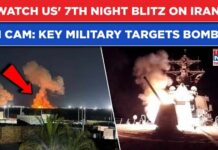
American officials do not attempt to rebut Shekarchi line by line, but their public posture implicitly challenges the “no safe place” narrative. CENTCOM reporting emphasizes that U.S. strikes on Iranian air defenses, radar sites, and anti-ship missile infrastructure aim to degrade the very capabilities Tehran relies on to threaten dispersed troops and assets. State Department legal and policy statements frame Operation Epic Fury—the joint U.S.–Israeli campaign against Iran—as collective self-defense under international law, stressing not helplessness but a structured effort to safeguard personnel and allies while imposing costs on Iran’s military.
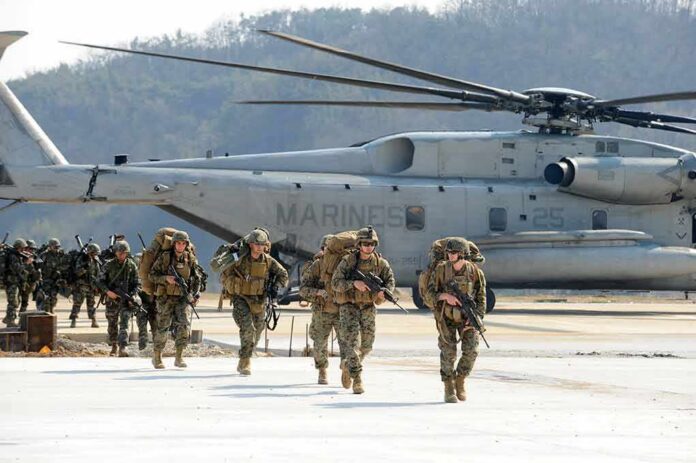
At the tactical level, U.S. forces have adjusted posture in response to threat spikes: withdrawing some personnel from exposed bases, changing patterns of movement, and issuing remote-work orders when specific facilities are under risk. These measures are not an admission that Iran can strike at will; they are risk management techniques familiar to any military operating under missile and drone threat. By dispersing forces, hardening key sites, employing active defenses, and rotating units, the United States aims to keep actual vulnerability below the level Iran’s rhetoric suggests, even while acknowledging that some risk is irreducible in a warzone.
Soft Targets, Hotels, and the Blurring of Front Lines
The most alarming part of Shekarchi’s message concerns hotels and civilian lodgings. He has claimed that American forces “hiding in hotels and relying on civilian areas as a protective shield” have already suffered severe casualties, citing an early-war attack that purportedly killed or wounded 160 U.S. personnel in such a facility. Independent confirmation of those specific casualty numbers is not available in the public record, but U.S. and media reporting do substantiate that hotels frequented by U.S. personnel have been targeted by Iranian-backed militias.
This use of soft targets is a calculated choice. By holding out the possibility that any hotel or tourist site could become a legitimate target once it houses U.S. troops or senior officials, Iran seeks to make routine force-protection practices—temporary billeting, staff travel, conferences—feel inherently dangerous. For American planners, this creates a complex problem: avoiding predictable patterns without paralyzing operations, and protecting civilians who may share space with U.S. personnel. It is also a reputational issue; attacks in public spaces attract global attention, magnifying the psychological impact of even limited strikes.
Psychological Warfare and Strategic Narrative
Iranian officials themselves describe the U.S. military presence as “psychological warfare, extortion, and bullying,” and their own messaging as a response aimed at shaking American confidence. The “no safe place” slogan functions on several levels. Domestically, it reassures Iranian audiences that their armed forces can impose costs on a superpower despite asymmetries in technology and economy. Regionally, it warns governments hosting U.S. bases that they may become collateral targets, nudging them to reconsider long-term defense ties. Internationally, it tries to complicate U.S. coalition-building by suggesting that involvement with Washington invites attack far beyond traditional battlefields.
Media ecosystems amplify this dynamic. Vivid phrases—troops “set on fire,” infrastructure “destroyed,” resorts “no longer safe”—travel quickly and are repeated across outlets, while careful U.S. language about “collective self-defense” and “degrading capabilities” rarely commands comparable attention. Over time, this asymmetry can make Iranian threats look more concrete than they are, simply because the warnings are more quotable. For a distant public, the steady drip of headlines about strikes on bases, tankers, and hotels can blur into an impression that U.S. forces are universally exposed, even when the underlying pattern remains geographically and operationally constrained.
What the Evidence Supports—and What It Does Not
Taken together, the record supports several firm conclusions. First, Iran has both the intent and the capability to threaten U.S. and Israeli personnel across a wide arc of the Middle East, including bases, ships, and selected soft facilities. Its missiles and drones have reached critical infrastructure; its proxies have hit hotels and public areas used by Western officials; and its leadership shows no desire to tolerate a long-term U.S. military footprint in the region.
Second, those capabilities do not amount to omnipresence. Iran’s ability to locate and strike dispersed U.S. personnel is uneven, contingent on intelligence flows, host-nation politics, and the robustness of U.S. defenses. The United States retains significant capacity to blunt attacks, relocate forces, and retaliate against launch sites, and is actively doing so. The battlefield evidence shows a contested environment with real hazards, not a one-sided vulnerability in which American troops lack any sanctuary at all.
Third, the “no safe place” phrase should therefore be understood primarily as strategic messaging—a hard-edged deterrent signal backed by enough real capability to be credible, but intentionally exaggerated to magnify fear and uncertainty. It reflects a broader shift in the nature of military risk: for forward-deployed U.S. forces in missile-saturated theaters, safety is now relative and managed rather than absolute. Iran is exploiting that reality to argue that the traditional American model of war, anchored in protected bases and assured supply lines, is ending.
Implications for U.S. Policy and Regional Stability
For U.S. decision-makers, the practical challenge is to treat Iran’s warnings seriously without allowing them to dictate strategic choices. That means continuing to invest in air and missile defenses, hardening critical nodes, diversifying basing arrangements, and tightening counter-intelligence in host nations—while also communicating to allies and adversaries that the United States still has both the will and the means to defend its forces. It also means recognizing that the psychological dimension of force protection now matters as much as the physical: troops and civilians need credible reassurance that hotels, ports, and airports can be made acceptably safe, even if risk can never be reduced to zero.
For regional governments, the “no safe place” rhetoric highlights the cost of hosting U.S. forces in an era of persistent missile and proxy warfare. States in the Gulf, Levant, and beyond must weigh the benefits of American security guarantees against the possibility that their own civilian spaces become targets when those guarantees are exercised. Iran’s explicit calls for Muslims to reveal U.S. and Israeli positions deepen that dilemma by threatening to turn local populations into intelligence battlegrounds.
In the end, Shekarchi’s warning is less a prophecy than a negotiating position. It stakes out a maximalist claim—total insecurity for U.S. troops and officials—to push Washington and its partners toward retrenchment. The available evidence shows Iran can make many places dangerous, especially in its immediate neighborhood; it does not show that it can make them all unsafe, all the time. Understanding that gap is essential for thinking clearly about deterrence, escalation, and the future of U.S. presence in the Middle East.
Sources:
pjmedia.com, youtube.com, iranintl.com, facebook.com, kurdistan24.net, islamtimes.com, humenglish.com, wanaen.com, centcom.mil, reuters.com, state.gov, cbsnews.com, fdd.org, politico.com, mei.edu, brookings.edu, understandingwar.org, britannica.com, atlanticcouncil.org